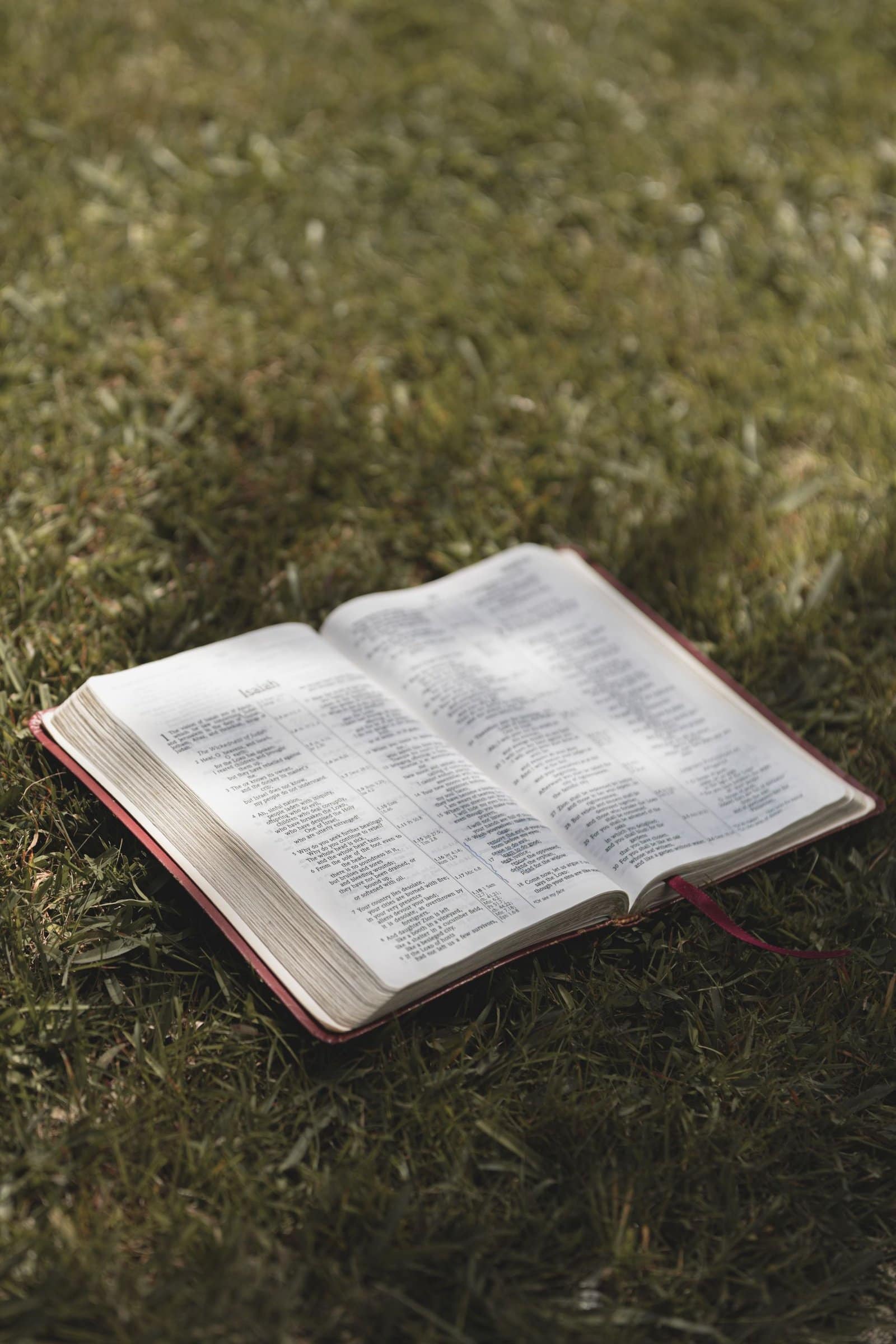
Is the Bible Misogynistic? Deconstructing the Myths
Is the Bible misogynistic?
Well, if someone reads Scripture through a narrow or skeptical lens—almost like looking through a straw—it’s easy to walk away feeling unsettled or even hurt by what they think they see.
At first glance, you might notice laws that seem uneven or difficult to understand in today’s context. You might see a long list of male authors, or cultures in the ancient world that didn’t reflect the dignity and equality we rightly value now. And for someone already carrying doubt, pain, or uncertainty, those surface-level impressions can feel jarring—like a gut punch to the heart.
For the skeptic, or for someone whose faith feels fragile or unsteady, that moment can become a reason to question everything. Sometimes even to conclude that the Word of God is flawed, outdated, or even harmful in parts. And honestly, it’s not hard to understand why someone might feel that way if they stop their reading there.
After all, who would want to serve a God whose Word feels oppressive or dismissive toward women?
But if we choose not to stop at the surface—when we slow down, lean in, and allow Scripture to interpret Scripture, rather than isolating fragments from the whole story, we begin to see not just what is written, but what is actually being revealed about His heart, His character, and His redemptive plan all along.
How Are You Judging The Word?
Let me ask you a question: would you judge the architecture of a building by looking at a single brick? Likely (hopefully) not. Why? Because there’s much more to that building than the single brick, right? There’s a “bigger picture”, such as support beams we can’t see, and even a foundation. So is true with God’s Word! It’s through this new lens we should be asking the question: is the Bible misogynistic?
To understand what the Word actually says about women and their place, we have to stop reading it through the lens of the woke, and instead start reading it through the lens of the Creator. When you peel back the layers of tradition and bad translations, you don’t find a God who suppresses women. You find a God who consistently breaks the rules of society to put women center stage and of equal importance to men.
Oh, and something to think about that I’ll dive deeper into a little later is this verse: Genesis 3:15, “I will put enmity between you and the woman, and between your offspring and her offspring; he shall bruise your head, and you shall bruise his heel.”
“The Bible is anti-women.”
Is the Bible misogynistic, really? If you’re skeptical of God’s Word, or sour from what you’ve read, you’re likely rolling your eyes at me right now. Maybe you’re aggressively skimming over these words to see where I’m headed with this post. I bet you’re thinking about the verses that tell women to be silent, and about the patriarchs who had multiple wives. You’re thinking about the fact that “He” is the pronoun we use for God, that only men wrote the books in the Bible, and that “the Bible blames Eve” for eating the apple.
But stay with me. If you’re willing to put down the straw and look at God’s Word as a whole, you’re going to see that God has been “pro-woman” since the very beginning.

The Bible Isn’t Misogynistic: Point One
When people ask, “Is the Bible misogynistic?” they usually point to the order of operations in the Garden of Eden. But if we’re looking at the architecture of the Temple, we have to look at the materials used. God created Adam from dust, as well as every other living thing on the earth.
Except…
Except for the woman. When no beast was found to be a suitable helper to man, God took the living half of a man and created a woman. The woman was the only creature on the entire planet that was not made from the ground. She was created from man while literally everything else was created from dust. This isn’t a story of subordination; it’s a story of oneness. God was showing that man and woman are of the exact same essence. Equal.
This also refers back to man and woman becoming “one flesh” in marriage (Genesis 2:24).
By using the rib, God was ensuring that Adam could never look at Eve as a separate species or a servant, but as his own flesh and blood. She wasn’t taken from his head to rule over him, nor from his feet to be trampled by him, but from his side to be equal with him.
The Bible Isn’t Misogynistic: Point Two
“The Lord God said, ‘It is not good for the man to be alone. I will make a helper suitable for him.’” — Genesis 2:18
One hurdle we sometimes come across is the word “helper” in the Bible, and what exactly it’s implying. To modern/feminist ears, a helper is an assistant, a junior, or someone who “helps” because the main person is the one doing the real work. A helper is seen as “less-than”. But the Hebrew word used in Genesis is Ezer.
What is an ezer? It isn’t a backup singer; it’s a first responder. In the original language, this word describes an ally who leaps into the fray the moment a cry for help is heard. An ezer is the one who abandons their own comfort to pull others out of the fire. They aren’t just “helping”—they are saving.
Still think that “helper” means less-than? The word ezer is used 21 times in the Old Testament, and 16 of those times, it refers to God Himself. That’s right… The One Himself is called a helper!
Think about that. In Psalm 121:1-2, it says, “I lift up my eyes to the mountains—where does my help (ezer) come from? My help (ezer) comes from the Lord, the Maker of heaven and earth.” Is God our subordinate, our secondary assistant? Is He just “chipping in” while we do the heavy lifting? Of course not. In the Bible, an ezer is a necessary ally! It describes a strength that rescues someone who cannot survive on their own. When God looked at Adam (who was surrounded by beasts that weren’t “good enough” to match him) He didn’t provide a servant to do Adam’s chores. He provided an Ezer Kenegdo—a “strength corresponding to him.”
The Bible Isn’t Misogynistic: Point Three
Remember Genesis 3:15 that I mentioned at the beginning? Let’s dive into that verse. This is where things get really interesting, and—if you’re like me—you get chills and teary-eyed.
In Genesis 3:15, God promises that the “seed of the woman” will eventually crush the head of the serpent. What does that mean? Well, for starters, that phrase is a biological anomaly. In every ancient culture (and even in the rest of the Bible’s genealogies) the “seed” was always attributed to the man. Lineage, inheritance, and identity were passed through the father, right?
And yet, when God announces the ultimate rescue mission for humanity, He bypasses the man entirely and says the seed of the woman would bruise the serpents head.
This was the first hint of the Virgin Birth, thousands of years before it happened! Do you understand what it’s saying? God was signaling that the most vital link in the chain of redemption wasn’t going to be a king’s scepter or a man’s strength, but instead it would be a woman’s womb! He made the female body the exclusive gateway for the Divine to enter the physical world!
Jesus Respected Women—That’s Not Misogyny
Let’s take a look now at the woman at the well in John 4, shall we?
In that day and age, a Jewish man (let alone a Rabbi) would never speak to a woman in public. On top of that, the woman at the well was a Samaritan (a racial enemy) and she had a “reputation”, if you know what I mean. She was clearly an outsider and outcast.
But, Jesus went out of His way to sit with her. And guess what? He had the longest recorded theological conversation in the Gospels with her. He chose a woman with a sinful and “unclean” past to be the very first person to whom He explicitly revealed His identity as the Messiah!
I’d argue that by doing this, Jesus was declaring that a woman’s spiritual capacity is equal to any man’s, regardless of what the “traditions of men” tried to claim at the time.
Look also at Jesus in the book of John. In a world where women’s voices didn’t matter, He entrusted the most important news in human history to a woman and told her to go tell the men.
“Jesus said to her, ‘Do not hold on to me, for I have not yet ascended to the Father. Go instead to my brothers and tell them…'” — John 20:17.
The Bible Isn’t Misogynistic: Point Four
Next, let’s think about Mary of Bethany. In a culture where women were expected to stay in the kitchen (like her sister Martha), Mary sat at Jesus’s feet. “Sitting at the feet” was the technical, legal stance of a rabbinical student, a/k/a a student being trained by a specific rabbi. By defending her, Jesus was essentially giving Mary a type of “scholarship” to the highest level of spiritual education, a right reserved strictly for men at the time. [Acts 22:3 mentioned this same type of teaching, specifically for Paul.] To sit at the feet of their rabbis was a sign of humility and submission. That is exactly the posture Mary showed when she sat at the feet of Jesus and listened.
Think next about the woman with the chronic bleeding (Mark 5). According to the “religious” laws of that day, she was “unclean.” If she touched you, you were contaminated. Period. But when she reached out to grab the hem of Jesus’s robe, He didn’t flinch. He didn’t scold her for “infecting” His holiness.
Instead, He stopped the whole crowd, looked at her, and called her “Daughter.” In one move, He signaled that her faith—and her dignity—was more powerful than any ancient taboo. He chose her healing over “the rules.”
The Bible Isn’t Misogynistic: Point Five
If the Bible were misogynistic and designed to keep women in the kitchen, Judges 4 and 5 would have been ripped out of the pages long ago and burned with men everywhere cheering and celebrating. Enter: Deborah. She wasn’t just a helper that hid behind the scenes; she was the highest authority in the land. She was a Prophetess, a Judge, and a military strategist.
In a time of absolute chaos, the entire nation of Israel traveled to sit under her palm tree to seek her wisdom. When it came time to go to war, the military commander, Barak, basically told her, “I’m not going unless you go with me.” He recognized that the Presence of God was on her in a way it wasn’t on him.
Want to know something even crazier?
The victory in that battle didn’t come from a man’s sword. It came through Jael (another woman) who took down the enemy general herself (Judges 4:21). God deliberately chose two women to rescue an entire nation while the men were hesitant to move. If God’s design was for women to be silent and sidelined, why would He entrust the survival of His people to their leadership and bravery?

Debunking Misinterpretations of Scripture
Do you want to know something that really grinds my gears? When people take God’s Word and use it as a weapon or a means of control. If you’ve ever seen someone use the Bible as a muzzle, they usually turn straight to 1 Timothy 2:12: “I do not permit a woman to teach or to assume authority over a man; she must be quiet.“
Okay great. So the Bible is saying women need to just keep their mouths shut all the time?
No.
Again, let’s look at the full architecture of the letter and what the author is trying to communicate here, and you’ll see that Paul was writing to Timothy in Ephesus.
Why does that matter, you ask? Oh, let me tell you: Because Ephesus was the headquarters of the Cult of Artemis—a religion where female priests claimed superior “secret knowledge” and dominated men with pagan rituals! So in other words: context matters. A lot.
Paul wasn’t issuing a universal gag order for all women for the rest of eternity. He was stopping a specific group of uneducated women in a specific city from bringing “Artemis-style” chaos into the new church. We know this because in other letters, Paul literally praises women who did teach!
In Acts 18:26, a woman named Priscilla (along with her husband) pulled the great preacher Apollos aside and taught him a more accurate way of the Gospel. If Paul’s “silence” rule was a permanent law for all women, he would have corrected Priscilla. Instead, he called her a “fellow worker in Christ Jesus” (Romans 16:3). You see, God doesn’t contradict Himself. If He calls women to prophecy and teach in one place, He isn’t silencing them in the next. He’s just a God of order who doesn’t tolerate false doctrine.
The Submission Myth
Are you ready for this next part? I’ve been doing some seriously deep digging into these topics, so I won’t be pulling any punches.
Let’s talk about the verse that has been used as an I’m-in-charge card by insecure and sometimes abusive men for centuries: “Wives, submit yourselves to your own husbands as you do to the Lord” (Ephesians 5:22).
If you stop right there, yeah, of course it sounds like a hierarchy. But I’ve recently learned that the original Greek manuscripts didn’t even have the word “submit” in verse 22! It was carried over from the verse right before it—Ephesians 5:21—which says, “Submit to one another out of reverence for Christ.”
Did you catch that?
The command isn’t “Women, get in line.” The command is mutual submission! It’s a call for both people to lay down their egos and serve each other.
Then Paul goes straight for the jugular. He tells husbands to love their wives “just as Christ loved the church and gave himself up for her” (Ephesians 5:25). Think about how Christ loved the church. He didn’t sit on a throne and demand grapes or food from the kitchen; He got on His knees and washed feet. He bled, and He died.
Christ sacrificed every ounce of His comfort to protect and elevate His people. I am sick of people twisting this piece of scripture and leaving out this immensely important part, because once it’s shown in the light, you see just how wrong people are when they try to put a gag on educated women.
Who was Junia?
If we need even more proof that the Bible isn’t trying to sideline women or degrade them, we just have to look at the names in the New Testament. Critics say women didn’t have titles? Let’s check the record, shall we?
In Romans 16:7, Paul sends greetings to Andronicus and Junia. He describes them as being “outstanding among the apostles.” For centuries, translators were so uncomfortable with a woman being called an apostle that they actually tried to change her name to “Junias” (a male name) in the texts! But the early church fathers knew the truth, and they acknowledged Junia was a woman and a powerful leader in the early movement. Alongside her, we see Phoebe, whom Paul calls a diakonos (Romans 16:1) — the same word used for “Deacon” or “Minister” in Greek.
Blaming Eve
If you think the Bible “blames” women for the fall of humanity, you need to re-read Romans 5:12. It doesn’t say sin entered the world through the woman. It says, “Sin entered the world through one man.” Oop. So even though Eve was the first to eat the fruit, God holds Adam legally responsible for the Fall. But why?
I’d argue it’s for a few massive reasons. First, he was the one who received the original command directly from God before Eve was even created. He held the Word in his heart, yet he still ate the fruit once he was prompted. He directly disobeyed God.
Now, some people argue that the responsibility of protection fell entirely on Adam and he just failed his post. I’ll be honest—I’m not 100% sure I buy the “helpless Eve” narrative. One reason being that she didn’t seek him out for permission or advice before she ate; she was an autonomous, powerful being who made an independent choice. She just did it.
You could say that if she had sought him out, he could have stepped in, referred back to God’s command, and shut the whole thing down. But we don’t even know for sure where Adam was during this time. Was he there “with her” in a literal sense, and just stayed quiet, or was he somewhere else?
Final Opinions
Is the Bible misogynistic? No. The world is. The Bible is the record of a God who consistently reaches into a broken, lopsided culture to pull women back into the light. From the “refined” creation of the rib to the “Seed of the Woman” prophecy; from Deborah’s military leadership to Mary Magdalene’s first shout of the Resurrection—God has been consistent.
He doesn’t see you as an afterthought and he doesn’t see you as a servant. He sees you as an Ezer—a necessary ally, a hero, and a co-heir to the Temple.
If you’ve been looking at the Word through a straw, it’s time to put it down. Step back and look at the whole building. You aren’t just a visitor in God’s story; you are part of the very structure. You are a sacred image-bearer; you are a Temple. It’s time to stop apologizing for a Book that was actually written to set you free.
So, is the Bible misogynistic? Only if you refuse to read the whole story.
If you want to dive deeper into the historical context of Scripture and unpack how biblical culture shaped these narratives, I highly recommend checking out Discovering the Bible: Story and Faith of the Biblical Communities edited by Alex Varughese. It’s an invaluable resource for understanding the ancient world, reading Scripture in its true context, and dismantling common misconceptions about how God’s Word views women.
